 KSA
 Oman
 UAE

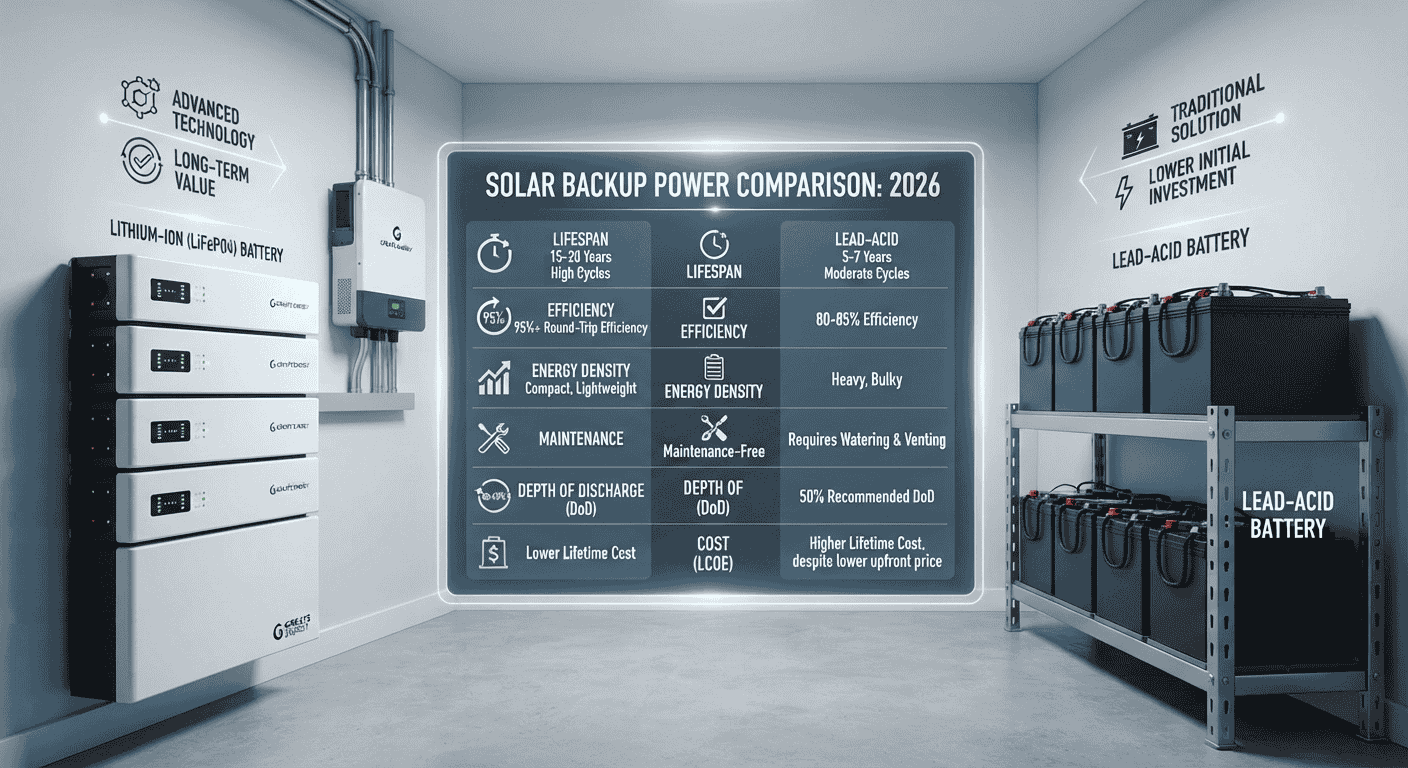
Solar energy is becoming an increasingly popular choice for homes and businesses looking to reduce electricity costs and adopt cleaner energy solutions. However, choosing the right battery is equally important to ensure a reliable power supply when sunlight is unavailable. In 2026, lithium and lead-acid batteries remain two important options for solar backup systems.
When comparing batteries for Solar Backup Power in 2026, factors such as battery lifespan, charging efficiency, maintenance, storage capacity and overall cost should be considered. Both technologies offer different advantages, but the right choice depends on your energy requirements, budget and usage patterns.
For businesses and property owners in Saudi Arabia, understanding these differences can help them make better decisions when investing in solar energy systems.
What Is Solar Backup Power?
Solar backup electricity means the energy which has been generated through solar panels and stored in batteries for use in times of need. Such stored energy is useful when there is no sunlight at all.
A typical solar battery system consists of solar panels, an inverter, a battery storage unit and a monitoring system. Batteries help store extra energy that has been generated and made use of wherever needed.
The right choice of battery improves access to electricity and enhances the feasibility of solar energy systems.
Lithium vs Lead-Acid Batteries: Understanding the Difference
Lithium and lead-acid batteries store electricity through different chemical processes. Their performance, lifespan and maintenance requirements vary significantly.
1. Lithium Batteries
Lithium-ion batteries, particularly Lithium Iron Phosphate (LiFePO4), are widely used in modern solar energy storage systems.
They offer high energy efficiency, faster charging, longer cycle life and greater usable storage capacity. Their compact design also makes them suitable for properties where installation space is limited.
Key advantages:
- Longer operating lifespan.
- Higher usable battery capacity.
- Faster charging and discharging.
- Lower routine maintenance requirements.
- Lightweight and space-efficient design.
These features make lithium batteries a popular choice for solar installations that require regular charging and discharging.
2. Lead-Acid Batteries
Lead-acid batteries are an established technology used in backup power systems. They are available in different types, including flooded, AGM and gel batteries.
One of their main advantages is the comparatively lower initial purchase cost. They can be suitable for smaller solar systems and applications where battery usage is occasional.
Key advantages:
- Lower upfront investment.
- Established and widely available technology.
- Suitable for certain basic backup applications.
- Established recycling infrastructure.
However, traditional lead-acid batteries generally have lower usable capacity, require more maintenance in flooded models and may need replacement sooner under frequent cycling conditions.
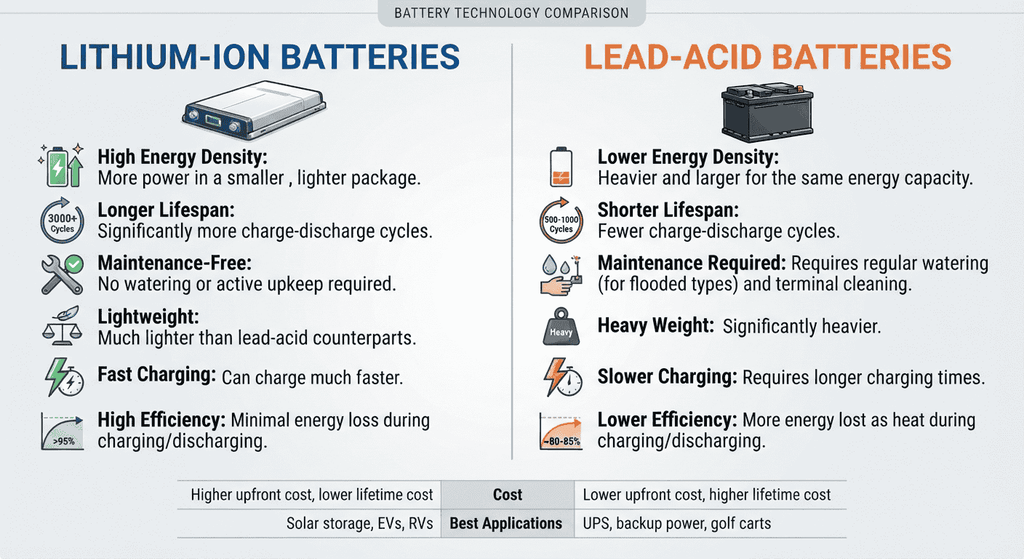
Lithium vs Lead-Acid: Key Comparison for Solar Backup Power in 2026
Understanding the main differences can help identify which technology offers better value for your solar installation.
| Comparison factor | Lithium (LiFePO4) | Lead-Acid |
| Initial cost | Higher | Lower |
| Battery lifespan | Generally longer | Generally shorter |
| Charging speed | Faster | Slower |
| Usable capacity | Higher | Lower |
| Maintenance | Minimal | Varies by type |
| Weight | Lightweight | Heavy |
| Energy efficiency | Higher | Lower |
| Daily cycling | More suitable | Less suitable |
Actual performance depends on the battery model, operating conditions, manufacturer specifications and installation quality.
Which Battery Is Better for Solar Backup Power in Saudi Arabia?
Saudi Arabia enjoys hot weather, especially during the summer season. Hence, there is a need for careful analysis of the battery operation environment, battery cooling and installation place.
The choice of lithium batteries like the LiFePO4 has been suggested to be the best choice when it comes to the modern solar energy system owing to the cycle life, higher usable capacity and efficient charging of the batteries.
On the other hand, the lithium batteries require temperature control as well as BMS. High ambient temperature may impair the performance of the batteries as well as shorten its life span if the system is not properly designed.
Lead acid batteries may also be used if it fits within budget and is only needed occasionally. The high temperature will speed up the aging process of the lead acid battery.
In 2025, a study was done on the comparison of lithium ion and lead acid batteries for residential solar in Saudi Arabia. This research was published in Energies.
When Should You Choose Lithium Batteries?
Lithium batteries are generally a better choice when:
- Your property uses solar energy every day.
- You require longer backup periods.
- You want higher usable battery capacity.
- Your installation has limited storage space.
- You prefer lower routine maintenance.
- You are planning a long-term solar investment.
They are particularly suitable for commercial buildings, offices, industrial facilities and residential properties with regular electricity storage requirements.
When Are Lead-Acid Batteries a Suitable Option?
Lead-acid batteries may be appropriate when:
- Your initial investment budget is limited.
- Backup power is required only occasionally.
- Your electricity storage requirements are relatively small.
- You have sufficient installation space.
- You can manage the maintenance requirements of the selected battery type.
Before purchasing, compare the expected replacement frequency and total ownership cost rather than considering only the initial price.
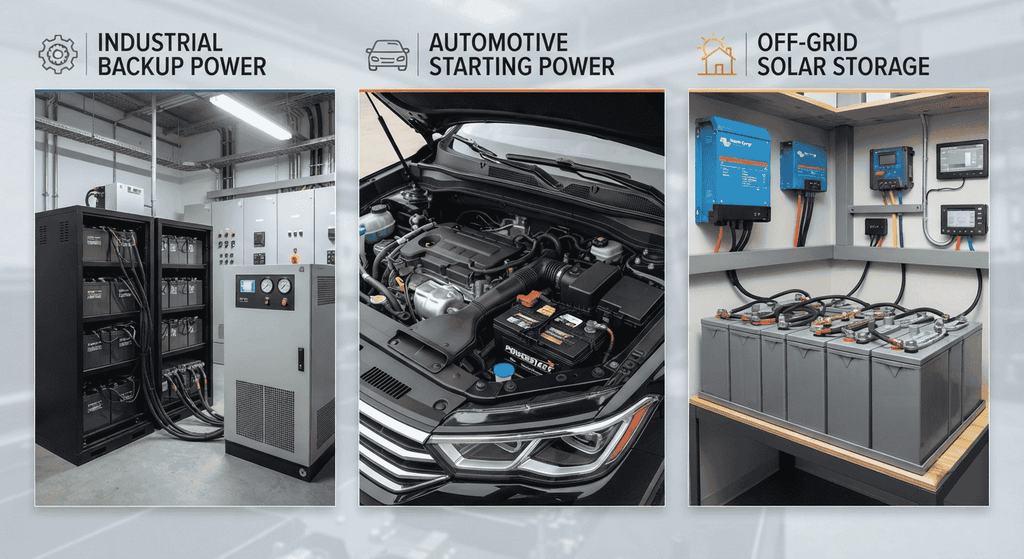
Future Trends in Solar Battery Technology in 2026
Solar battery technology continues to develop as renewable energy adoption increases across Saudi Arabia.
Some important trends include:
Advanced Lithium Battery Technology: Improved LiFePO4 batteries are supporting longer operating life, better energy management and more efficient storage solutions.
Smart Battery Monitoring: Modern battery management systems provide real-time information about charging levels, temperature, performance and battery health.
Solar and Battery Integration: More businesses are combining solar panels with battery storage to improve energy availability and manage electricity consumption.
Growing Commercial Energy Storage: Industries, commercial buildings and infrastructure projects are increasingly exploring battery storage to support reliable electricity supply.
These developments are expected to strengthen the role of battery storage in Saudi Arabia’s renewable energy sector.
Conclusion
Both lithium and lead-acid batteries have their own advantages for solar backup applications. Lead-acid batteries offer a lower initial cost, while lithium batteries generally provide better efficiency, higher usable capacity, faster charging and longer operating life.
For most modern solar installations requiring regular energy storage, LiFePO4 batteries are often the stronger long-term option. However, the final decision should depend on your energy consumption, installation environment and budget.
Greats Energy helps businesses explore suitable energy solutions to support their power requirements and sustainability goals. Choosing the right battery technology is an important step towards building a reliable and efficient solar energy system.
Looking for reliable solar energy and battery solutions in Saudi Arabia? Contact Greats Energy to explore the right energy solutions for your business.